
Finding rooms for rent in Atlanta can be a practical way to reduce housing costs while living closer to work, school, or places you visit regularly. The city attracts students, recent graduates, working adults, and people relocating from across the United States. Renters may find private rooms in apartments, condominiums, townhomes, and single-family houses.
The advertised rent is only one part of the decision. A room may require separate payments for utilities, internet, parking, or household supplies. A lower-priced option can lose its advantage if it creates a difficult commute or requires frequent rideshare trips.
Affiliate disclosure: This article contains affiliate links. If you use one of these links, we may earn a commission at no additional cost to you.
This guide explains how to compare Atlanta rooms for rent, evaluate potential roommates, understand rental agreements, and avoid common problems before moving in.
Why Consider Renting a Room in Atlanta?
Renting a private room generally costs less than leasing an entire apartment, although the difference depends on the property, location, amenities, and current market. Shared housing may also reduce initial expenses when common furniture and household equipment are already available.
A room rental may be useful for:
- Students who want a manageable trip to campus
- Young professionals who prefer access to central employment areas
- Working adults trying to reduce monthly housing expenses
- People relocating to Atlanta who need temporary accommodation
- Renters saving for a future apartment or home purchase
The tradeoff is reduced privacy. You may share a bathroom, kitchen, living room, laundry area, or parking space. Household rules can affect your visitors and use of common areas, so expectations matter almost as much as the bedroom.
Build a Complete Room-Rental Budget
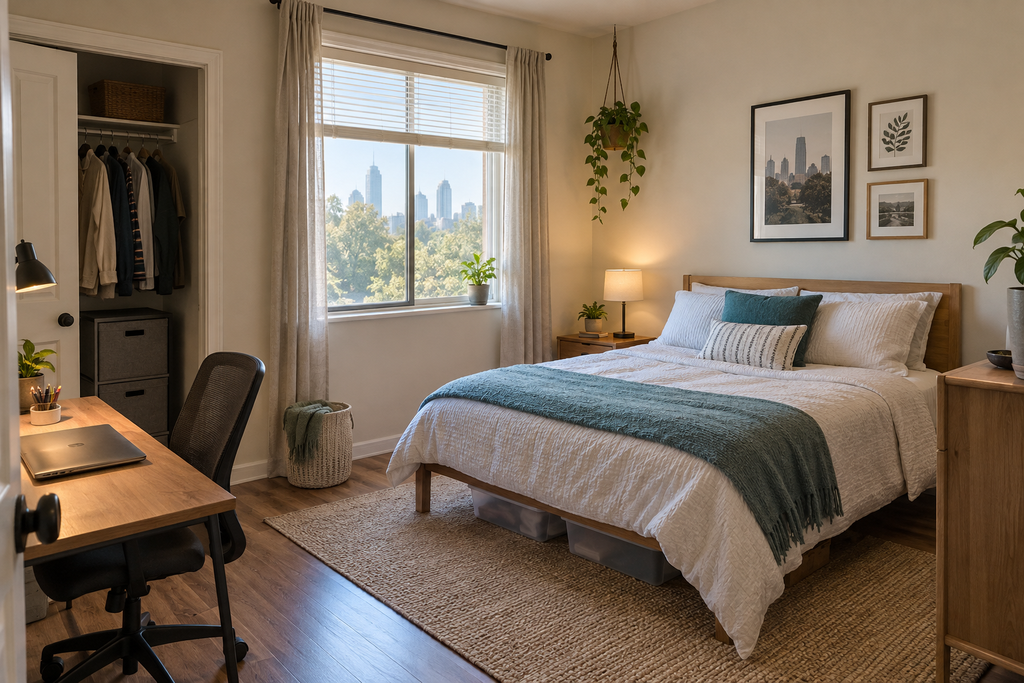
There is no standard price for rental rooms in Atlanta. Costs vary according to the neighborhood, room size, bathroom arrangement, furnishings, parking, lease length, and included utilities. Since rental conditions change, compare active listings instead of depending on an old citywide estimate.
Your budget may need to cover:
- Monthly rent
- Security deposit
- Application or screening fees
- Electricity, gas, and water
- Internet service
- Parking charges
- Renter’s insurance or pet charges
- Laundry and household supplies
- Transportation expenses
Atlanta’s warm summers can mean regular air-conditioning use. Ask whether utilities are included, divided evenly, calculated by usage, or charged as a fixed amount. If they are included, confirm whether a usage limit applies.
Transportation belongs in the calculation too. A cheaper room may not save much if you need frequent rideshare trips, pay for daily parking, or drive a long distance to work. Compare the total monthly cost of each option, not only the rent displayed in the advertisement.
Once you have established a realistic budget, you can browse available rooms in Atlanta as one part of your search. Independently verify every property, listing, rental term, and person offering a room before sending money.
Choose an Atlanta Location That Fits Your Routine

Two Atlanta addresses that appear close on a map can create different commuting experiences. Traffic, transit, and parking all influence whether a location will work for you.
Identify the places you need to reach regularly, then evaluate neighborhoods according to your actual schedule.
Midtown and Downtown
Midtown may appeal to renters seeking access to offices, Georgia Tech, and MARTA rail service. Downtown can be convenient for Georgia State University, government offices, and events.
Rooms in central locations may provide less space or limited parking. If you own a vehicle, ask whether the rental includes a dedicated space and whether the building charges an additional parking fee.
Buckhead
Buckhead includes commercial and residential areas, apartments, and condominiums. It may be convenient for people working nearby.
If you are considering a room in an apartment or condominium, confirm that the primary lease and building rules allow individual room rentals, subleasing, or additional occupants. A current tenant may be willing to rent a room even when the property rules do not permit it.
Old Fourth Ward, Virginia-Highland, and East Atlanta
These areas may interest renters who value restaurants, trails, entertainment, or neighborhood character. Visit at the times you would normally be home because noise and parking conditions may change during the day.
West Midtown, Decatur, and Nearby Communities
West Midtown has a mixture of housing, offices, and restaurants. Decatur and nearby communities may also be practical when a property provides suitable access to work, school, or MARTA.
Some listings marketed as Atlanta rentals are technically outside the city. Confirm the full address and calculate the commute from the property instead of relying on phrases such as “near Midtown.”
Check Transportation Before Choosing a Room
A property only a few miles from work can still create a slow trip during busy periods. Check the route during your expected travel hours rather than relying on a midday estimate.
If you plan to use MARTA, check:
- Walking distance to the nearest station or bus stop
- Conditions along the walking route
- Transfers and service during your required hours
- The complete trip to your destination
Transit routes and schedules can change, so verify current information through MARTA. Drivers should ask about parking, permits, guest spaces, and street restrictions. If several roommates have vehicles, confirm that the property can accommodate them.
Decide What Kind of Room You Need
The phrase “private room” does not fully explain the arrangement. The bathroom may be private or shared, and the bedroom could be furnished, partly furnished, or empty.
Before scheduling a viewing, ask whether the rental includes:
- A bedroom door with a working lock
- Closet or storage space
- A private or shared bathroom
- Kitchen and laundry access
- Heating, air conditioning, and furniture
- Parking and access to common areas
- Mail and package delivery
Be cautious if the bedroom appears to be a converted or partitioned area. Ask whether it is legally permitted and suitable for sleeping. Check the ventilation, smoke alarms, exits, windows, and locks. The room shown should be the exact room identified in your agreement.
Evaluate Roommate Compatibility

A comfortable bedroom cannot compensate for a stressful household. Compatible roommates do not need identical personalities, but they should be able to discuss expectations clearly.
Ask about schedules, cleaning, cooking, visitors, smoking, pets, and noise. A night-shift worker may need daytime quiet, while a remote worker or student may need reliable internet and a calm environment.
Discuss these subjects before moving in:
- Cleaning responsibilities and shared supplies
- Quiet hours and work schedules
- Guests, smoking, and pets
- Bathroom and kitchen routines
- Temperature, parking, and common areas
Pay attention to how residents answer ordinary questions. Conflicting explanations about occupancy, bills, or household rules deserve further investigation.
Get the Rental Terms in Writing
Do not depend entirely on a verbal arrangement. A written lease, sublease, or roommate agreement should identify the room, rent, rental period, included services, and important household rules.
A room may be offered by an owner, property manager, or existing tenant. For a sublease, ask for evidence that the owner and primary lease permit it.
Review the agreement for:
- Monthly rent and payment due date
- Deposit amount and return conditions
- Lease start and end dates
- Lease type, utility responsibilities, and late fees
- Required move-out notice
- Guest, pet, and smoking policies
- Maintenance procedures
- Parking, common-area access, and entry rules
- Consequences of leaving early
Put important permissions in writing. For questions about Georgia landlord-tenant law or a dispute, consult a qualified Georgia attorney or appropriate local housing organization.
Plan for Utilities, Privacy, and Shared Expenses
Shared bills can create conflict when residents have not agreed on how to divide them. Before moving in, confirm which utilities are included, whose name appears on each account, and when your portion must be paid.
An equal split may be simplest, but some households divide expenses by room size, occupancy, or usage. Decide how to handle household supplies, shared groceries, services, maintenance, and common-area damage.
Confirm who has bedroom keys and when the owner, manager, or primary tenant may enter. Set boundaries for belongings, food, visitors, and storage.
Keep records of rent, deposits, utilities, and other payments. If you pay an individual instead of a property-management company, request a receipt or use a payment method that creates a reliable transaction record.
Recognize Room-Rental Scam Warning Signs
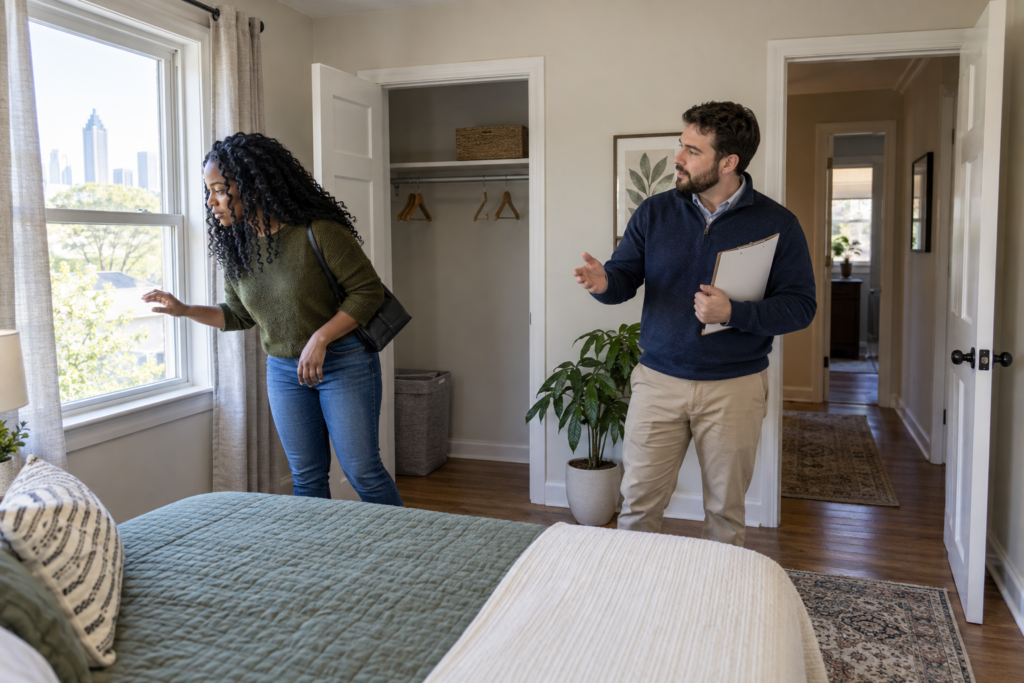
Rental scams often rely on appealing photographs, unusually low prices, and pressure to pay quickly. Treat verification as a normal part of renting.
Warning signs may include:
- Refusal to arrange an in-person viewing or live video tour
- Requests for payment before you see the room
- Pressure to transfer a deposit immediately
- Demands for gift cards, cryptocurrency, or unusual payment methods
- A price far below comparable active listings
- Inconsistent names on the advertisement, agreement, and payment account
- Photographs copied from unrelated listings
- Vague or inconsistent information about the property
- Premature requests for sensitive financial information
- Inability to show authorization to rent the room
Search the address, compare advertisements, and verify that the owner, manager, or authorized tenant controls the property.
Tell someone when visiting an unfamiliar home, and consider bringing another person. Leave if the property differs materially from the advertisement or reasonable questions go unanswered.
Questions to Ask During a Viewing
A viewing should help you confirm the property’s condition and the rental terms. Ask:
- What is the complete monthly housing cost?
- Which utilities and services are included?
- How much must I pay before moving in?
- Who owns or manages the property?
- Is this a direct rental or an authorized sublease?
- How many people live in the home?
- Who will share the bathroom?
- How are cleaning responsibilities divided?
- Are overnight guests allowed?
- Is parking included?
- How are repairs reported, and what move-out notice is required?
- Will I receive a written agreement and payment receipts?
When possible, test the locks, faucets, lights, appliances, cooling system, internet, and cell reception. Look for water damage, pests, broken windows, and blocked exits. Photograph the room before moving in, and save the listing, agreement, payment records, and important messages.
Find a Room Without Rushing the Decision
Use several search methods instead of relying on one source. Roommate platforms, established rental websites, university housing boards, community groups, professional networks, and personal referrals may produce different options.
When contacting potential roommates, explain your move-in date, budget, schedule, preferred location, and essential needs without publishing sensitive information publicly.
You can search for rooms and potential roommates in Atlanta while checking other legitimate housing sources. Regardless of where you discover a listing, inspect the property, meet potential roommates safely, confirm that the person offering the room has permission to rent it, and review the written terms before paying.
Compare options using the same criteria: total cost, commute, condition, privacy, residents, lease terms, transportation, and household rules.
Make an Informed Atlanta Room-Rental Decision
The right room for rent in Atlanta is not necessarily the cheapest option or the one closest to Downtown. It is the room that fits your complete budget, daily commute, privacy needs, and preferred household environment without requiring you to overlook serious concerns.
Visit the property, talk openly with potential roommates, and calculate the full monthly cost. Obtain important terms in writing and confirm that the person accepting your money is authorized to offer the room. If a listing relies on pressure, unusual payment requests, or unclear answers, keep searching.
Atlanta offers many types of shared housing, from bedrooms in central apartments to private rooms in residential communities outside the urban core. Compare your options carefully, verify the details, and choose an arrangement that will remain practical after move-in day.